


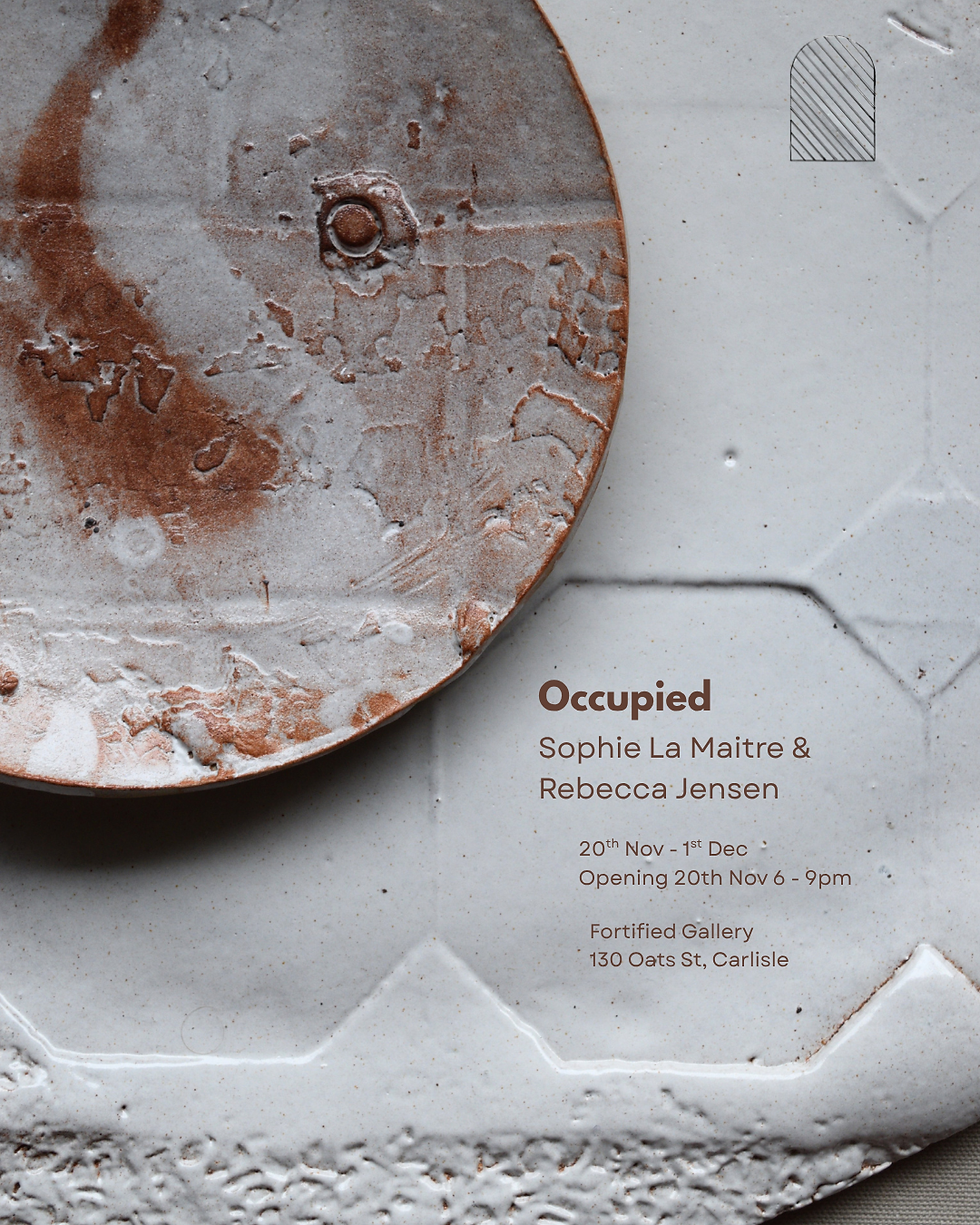


Occupied. 2025
letterpress, etching, woodblock print, found objects, ceramics, orange blossom water, charcuterie
Catalogue Essay
We work late installing the work, the art always takes longer than expected to install. But we forget this. Overheating. Tired. Not tired. The next day begins with errands. Lamps, fans, wines, cheeses collected and collated. A mad dash after work to make the opening on time. The day job mustn’t be eschewed.
Late.
The catalogue essay hasn’t been written. Yet the evening marks the welcome occasion of the payment of a deposit. Off the hamster wheel of renting, onto the hamster wheel of paying a mortgage. Mould spreads further on the ceilings of rentals. A cockroach greets us in the corner.
The sole piece of paper which validates the exhibition financially is not yet printed. A list of prices - a guiding map which offers respite to those unsure of where the art begins & ends, does not land in outstretched hands. There’s a weirdness to the coziness of the space which seems counterintuitive. All works unsold after the opening.
Missed opportunity. Maybe.
The mundane is at this moment busy. filled to the brim with little things to do. Now in a state of semi-security, we find ourselves occupied. Filling time, filling place. Though not fully engaged in the tasks at hand.
~
Produced while in residence at NMTafe’s shopfront gallery, these works aim to perforate the already permeable membrane between art and the everyday. Crafted during the height of a rental crisis, the plates function as an archive of a space we briefly lived, worked, ate and had at least one (opening) party. Despite the overwhelming mundanity of the situation, the plates function as a reminder that our access to the building with wooden floors, central location, high ceilings and vintage accents - like our own rental homes, was/ is fleeting. While these spaces left us with an impression, we ultimately erased our own in time for the new occupants.
The clay is a reference to the popularity of pandemic hobbies, where idle hands became increasingly drawn to art as a way to pass the time – with generally banal and at times gumpy outcomes proliferating. In the background of this new found creativity, professional artists floundered as paid opportunities dissolved and the spectre of cost of living forced many artists back into ‘real jobs’. The works therefore wryly embrace function, as form has been charmingly eschewed.